Estonian vehicle · Pärnu hariduskeskus
Concept & Donor Vehicle
Simple to build. Affordable to develop. Built in-house.
A student-built electric vehicle connecting core workshop skills with sensors, automation and autonomous mobility.Our approachThe donor vehicleAdvantages & limitationsHigh-voltage safety
01 · Preparation
Learning starts with the build
As part of edumob 2.0 – Bridging VET education and next-gen autonomous vehicles, Pärnu hariduskeskus is developing a DIY vehicle that brings together automotive, welding, electrical and mechatronics students.
The vehicle should be straightforward to build and useful for teaching. Students will practise their core skills through real tasks: dismantling, measuring, fabrication, welding, wiring, programming and testing. Each task contributes to a shared, functioning learning platform.
Built in-house
The more we can do within our own school, the better. Students and teachers will prepare the donor, adapt its structure, manufacture brackets and mountings, and install and connect components. Specialist services such as sandblasting and powder coating may be outsourced where appropriate.
Affordable and understandable
We prioritise reused components, readily available parts, standard materials and simple designs. Open-source software and parts made in-house, including 3D-printed components, will be used where suitable. Solutions should be understandable, repairable and adaptable by other schools.
One vehicle, different curricula. A mounting designed by one group can be manufactured by welding students, installed by automotive students and connected and tested by electrical and mechatronics students.
02 · Donor vehicle
Why the Mitsubishi i-MiEV?
We selected the Mitsubishi i-MiEV as our main donor vehicle because it combines local availability with a relatively straightforward electric vehicle architecture. Estonia’s government programme, launched in 2011, introduced these cars for social workers, establishing a local fleet. Many of these vehicles have now reached an age where their usefulness for daily transport is increasingly limited by battery degradation and reduced driving range. For a school, however, an older i-MiEV can still provide a complete set of real electric vehicle systems in one compact platform. Selecting a suitable donor allows us to reuse the original drivetrain, charging equipment and control systems, while directing our resources towards student-built structures, sensor mountings and additional control equipment. This gives an existing vehicle a second purpose and makes the preparation itself part of the learning process.
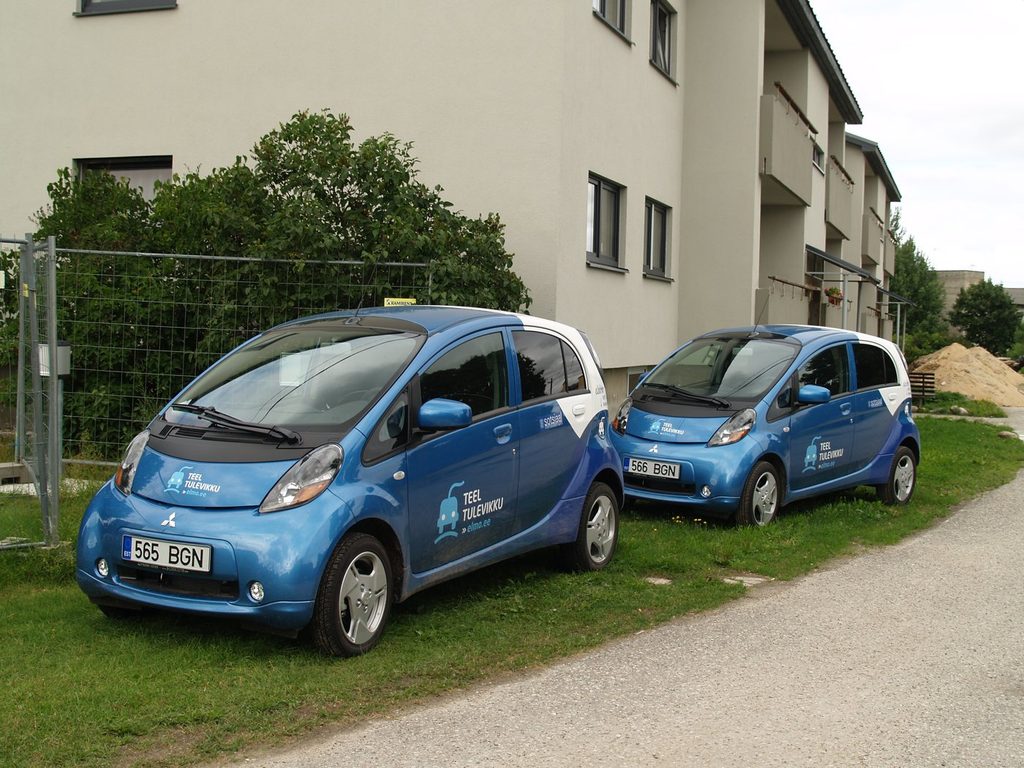

Limited range, lasting educational value
These cars are now more than ten years old, and battery condition varies considerably. The original battery had a nominal capacity of 16 kWh. In a heavily degraded example, practical driving range may be only around 20 km, depending on battery condition, temperature and use. This is an example of a worn battery, rather than a typical range for every i-MiEV.
That may be too little for everyday transport, but long driving range is not important for our project. Short workshop movements and controlled test runs need much less energy. A battery assessed as safe and suitable for continued use can still serve a valuable educational purpose.
A “moving training stand”
In our vocational teaching context, the i-MiEV is a moving training stand: it contains charging connections, an onboard charger, a traction battery, an inverter, an electric motor, a DC/DC converter and the associated controls. These real systems provide a foundation for demonstrations, diagnostics and measurements. Preparing the body and improving access will make the components easier to study.
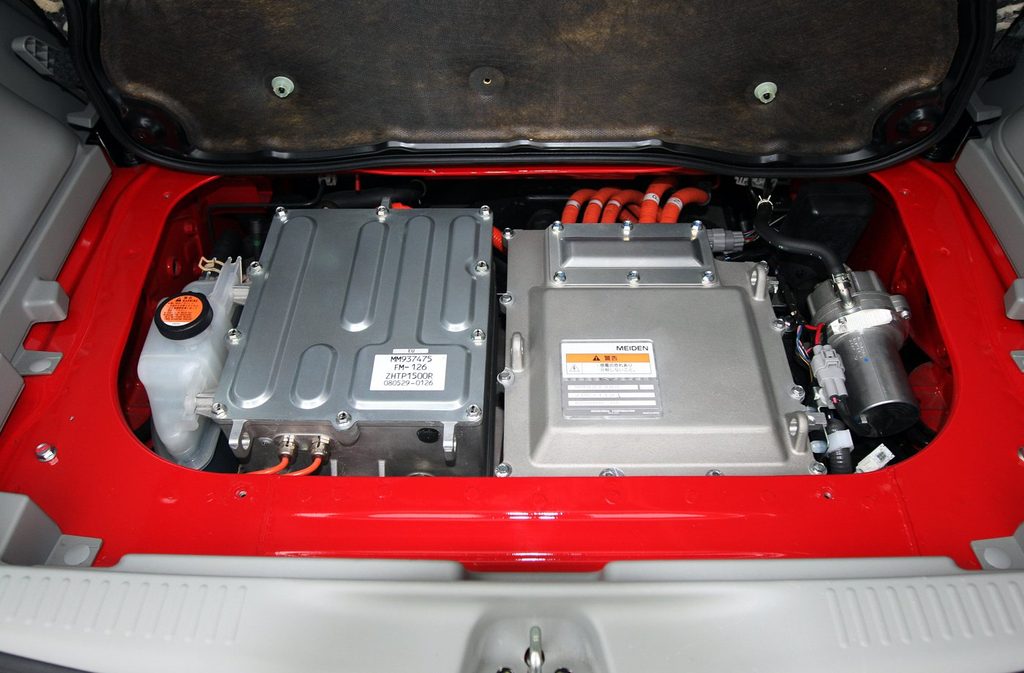

Building on the original controls
We intend to retain the original drivetrain, wiring and vehicle control units wherever practical. Our approach is to interface with selected control inputs and commands so that additional equipment can request vehicle actions. Steering and braking will also require suitable actuation and control arrangements.
The relatively straightforward architecture makes the i-MiEV a manageable starting point for investigation. However, immobiliser functions, CAN communication and safety interlocks must be understood and verified; successful autonomous operation is a development goal, not an automatic result of retaining the original wiring.
03 · At a glance
Advantages & limitations
Our donor choice balances affordable, practical learning with the constraints of reusing a complete electric vehicle.
+ Advantages for our project
| Advantage | What it means for us |
|---|---|
| Local donor base | Estonia’s former social-service fleet provides a starting point for finding donor vehicles and reusable components. |
| Complete EV systems | Battery, charger, inverter, motor and original controls are already part of one vehicle. |
| Manageable architecture | A relatively straightforward platform for studying wiring, control units, sensors and communication. |
| Lower build costs | Reusing functioning components reduces the need to purchase or develop a complete drivetrain. |
| Learning across different curricula | The build connects different curricula, including automotive technology, welding, electrical installation, electronics and mechatronics, through shared practical tasks. |
− Limitations and design responsibilities
| Limitation | How we will address it |
|---|---|
| Control integration takes development | Investigate and test interfaces in stages. Provide reliable stopping, manual override and controlled behaviour if a fault occurs. |
| Hazardous high voltage | Preserve protective systems, enclose live parts, protect and identify cables, and restrict high-voltage work to trained personnel. |
04 · Safety in preparation and use
High-voltage safety by design
The original traction battery operates at approximately 330 V nominal, rising to around 370 V during charging. This presents a potentially fatal electric shock hazard. Retaining a real EV battery means that protection must be built into the learning platform from the start.
Identify and protect. Orange high-voltage cables and warning labels must remain recognisable. Cables need protection from sharp edges, abrasion, fabrication work and accidental short circuits. High-voltage terminals and components must remain enclosed or guarded.
Make components visible without making live parts accessible. Opening up the body for teaching must preserve electrical insulation, protective covers and relevant safety interlocks.
Plan who can do each task. High-voltage work is restricted to appropriately trained personnel following the manufacturer’s procedures, using suitable protective equipment, safe isolation and verification that the relevant circuits are de-energised. Student tasks will match their training and supervision.
The value lies in both the finished vehicle and the skills students gain while building it. Technical references & image licences
- Government of Estonia: introduction of i-MiEVs for social workers, 21 October 2011.
- Mitsubishi i-MiEV Emergency Response Guide: battery rating and high-voltage precautions. Check the documentation applicable to the specific donor before work.
- The 20 km range is a project example for a heavily degraded battery, not a manufacturer specification or a measurement of this donor.
- Both photographs retain their individual CC BY-SA 3.0 licences, linked below each image.